


Do you want to contribute by writing guest posts on this blog?
Please contact us and send us a resume of previous articles that you have written.
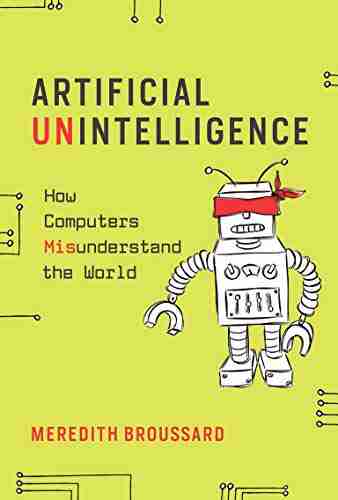
Artificial Unintelligence: How Computers Misunderstand The World

Have you ever wondered why sometimes computers seem utterly clueless? Why they fail to understand our intentions and can even make hilariously nonsensical mistakes? Welcome to the world of artificial unintelligence! In this article, we will explore the fascinating realm of computer misunderstandings and delve into the reasons behind these perplexing situations.
The Rise of Artificial Intelligence
In recent years, artificial intelligence (AI) has become a buzzword in the tech industry. Companies are investing heavily in developing AI systems that can learn, reason, and perform tasks that traditionally required human intelligence. From voice assistants like Siri and Alexa to self-driving cars, AI is transforming various aspects of our daily lives. However, along with its remarkable advancements, it is crucial to understand the limitations and drawbacks of AI systems.
Understanding Artificial Unintelligence
Artificial unintelligence refers to the inability of computers to accurately comprehend and interpret human intentions or the world around them. While AI systems are constantly improving, they often struggle with certain aspects of human communication and context. Their inability to grasp nuances, idioms, emotions, cultural references, and other subtleties can lead to misinterpretations and sometimes comical errors.
4.5 out of 5
| Language | : | English |
| File size | : | 1913 KB |
| Text-to-Speech | : | Enabled |
| Enhanced typesetting | : | Enabled |
| Print length | : | 340 pages |
| Screen Reader | : | Supported |
| Paperback | : | 144 pages |
| Item Weight | : | 6.3 ounces |
| Dimensions | : | 5.51 x 0.51 x 8.27 inches |
One classic example of artificial unintelligence is machine translation. While these systems have made great strides, they still struggle with accurately translating idioms or phrases common to specific languages. For instance, a literal translation of the French phrase "C'est la fin des haricots" would be "It's the end of the beans." A human translator would understand that this phrase means "It's the end of the line" or "It's all over." But a machine translation might produce a meaningless or absurd result, highlighting the challenges of linguistic nuances.
The Challenges of Context
Another major obstacle faced by AI systems is context comprehension. Humans rely on contextual cues to derive meaning, as we understand that words can have multiple interpretations depending on the situation. However, computers struggle to identify and interpret context accurately. This limitation often leads to misinterpretations or unintended consequences.
Consider the case of YouTube's automated video recommendation system. Although this system is designed to provide users with content based on their preferences and viewing history, it can sometimes promote inappropriate or misleading videos. The lack of context recognition can inadvertently expose users to harmful or biased content, highlighting the potential dangers of artificial unintelligence in algorithmic decision-making.
The Pitfalls of Image Recognition
Image recognition, another fundamental aspect of AI, can also be plagued by artificial unintelligence. While AI systems have achieved impressive accuracy in identifying objects, they can still misinterpret or incorrectly classify certain images. In 2015, a widely reported incident occurred when Google Photos misidentified African American individuals as gorillas. This demonstrates the biases embedded in the training datasets and the complexities of accurately recognizing and classifying images.
Moreover, AI systems can sometimes generate misleading or nonsensical outputs based on imperfect input data. For instance, chatbots powered by AI technology can produce bizarre responses or even offensive content due to the algorithms' exposure to biased or inappropriate user inputs. These instances highlight the importance of continuous monitoring and refining of AI systems to enhance their understanding and avoid unintended consequences.
The Future of Artificial Unintelligence
Despite the challenges and limitations, researchers and developers are continuously working to improve AI systems and address the issue of artificial unintelligence. Natural language processing techniques, context-aware algorithms, and bias detection mechanisms are just a few fields of study aimed at reducing misunderstandings and improving AI's ability to comprehend human intentions and context better.
The future holds great potential for AI systems that not only understand the words we say but also interpret their underlying meaning and context accurately. Imagine a world where voice assistants can grasp humor, sarcasm, and emotions, enhancing our interactions and understanding.
Artificial unintelligence is a fascinating phenomenon that sheds light on the limitations and challenges faced by AI systems. While computers have made tremendous progress in replicating human intelligence, they still struggle with understanding the complexities of human communication and context. It is essential to acknowledge these limitations and work towards minimizing misunderstandings and unintended consequences in the evolving field of AI. By doing so, we can ensure that AI systems enhance our lives while avoiding the pitfalls of artificial unintelligence.
4.5 out of 5
| Language | : | English |
| File size | : | 1913 KB |
| Text-to-Speech | : | Enabled |
| Enhanced typesetting | : | Enabled |
| Print length | : | 340 pages |
| Screen Reader | : | Supported |
| Paperback | : | 144 pages |
| Item Weight | : | 6.3 ounces |
| Dimensions | : | 5.51 x 0.51 x 8.27 inches |
A guide to understanding the inner workings and outer limits of technology and why we should never assume that computers always get it right.
In Artificial Unintelligence, Meredith Broussard argues that our collective enthusiasm for applying computer technology to every aspect of life has resulted in a tremendous amount of poorly designed systems. We are so eager to do everything digitally—hiring, driving, paying bills, even choosing romantic partners—that we have stopped demanding that our technology actually work. Broussard, a software developer and journalist, reminds us that there are fundamental limits to what we can (and should) do with technology. With this book, she offers a guide to understanding the inner workings and outer limits of technology—and issues a warning that we should never assume that computers always get things right.
Making a case against technochauvinism—the belief that technology is always the solution—Broussard argues that it's just not true that social problems would inevitably retreat before a digitally enabled Utopia. To prove her point, she undertakes a series of adventures in computer programming. She goes for an alarming ride in a driverless car, concluding “the cyborg future is not coming any time soon”; uses artificial intelligence to investigate why students can't pass standardized tests; deploys machine learning to predict which passengers survived the Titanic disaster; and attempts to repair the U.S. campaign finance system by building AI software. If we understand the limits of what we can do with technology, Broussard tells us, we can make better choices about what we should do with it to make the world better for everyone.

 Anthony Burgess
Everything You Need To Know About Building Referral...
Are you looking for ways to boost revenue...

 Glen Powell
 Aleksandr Pushkin
The Fascinating History of Afro Uruguay - Unveiling the...
Afro Uruguay refers to the rich and diverse...

 Anton Foster
Reflections From Stubborn Son: A Journey of...
Have you ever encountered a stubborn...
 Brennan Blair
Discover the Revolutionary World of Protein Modelling:...
Protein modelling is an essential...

 Ricky Bell
The Best Old Fashioned Advice: Timeless Wisdom Passed...
Have you ever turned to your grandparents,...

 Isaiah Price
Embark on an Unforgettable Journey: The Sword and Sorcery...
Are you ready to be...

 Hassan Cox
The Enchanting World of Wendy Darling Comes Alive in...
Step into the magical world of Neverland...

 Ivan Turner
Adsorption Calculations And Modelling Chi Tien: Unlocking...
In the field of chemistry, adsorption is a...
 Harvey Hughes
Unleashing the Full Potential of a Team: How To Organize...
"Genius is 1% inspiration and 99%...
 Desmond Foster
The Fascinating Journey of George Romanes: From...
George John Romanes, born on May 20, 1848,...

 Adrien Blair
The Untold Truth: The Bible In The Early Church - A...
Lorem ipsum dolor sit amet, consectetur...
Light bulbAdvertise smarter! Our strategic ad space ensures maximum exposure. Reserve your spot today!



 Heath PowellThe Untold Tales of Bernal Diaz Del Castillo: Unveiling the Adventures of a...






 Lucas ReedUnlock the Secrets: The Essential Law Self-Teaching Guide You've Been Waiting...





 Victor TurnerFollow ·13.3k
 Stuart BlairFollow ·2.8k
 Natsume SōsekiFollow ·17.8k
 Liam WardFollow ·17.4k
 Chad PriceFollow ·3.7k
 Marc FosterFollow ·19.5k
 Spencer PowellFollow ·12.1k
 Arthur Conan DoyleFollow ·4.7k
