


Do you want to contribute by writing guest posts on this blog?
Please contact us and send us a resume of previous articles that you have written.
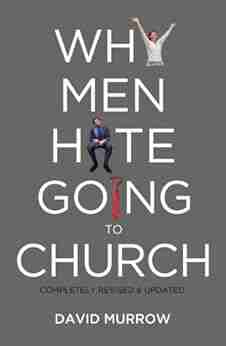
Why Men Hate Going To Church - The Real Reasons Behind the Aversion


In today's society, an increasing number of men are expressing their aversion towards attending church services. The pews that were once filled with male believers are now predominantly occupied by women. It is an alarming trend that calls for a deeper understanding of the underlying reasons.
While it is essential to acknowledge that not all men dislike going to church, statistics show that there is a significant disparity between male and female attendance. This article aims to explore the reasons behind this phenomenon and shed light on the factors that deter men from participating actively in religious congregations.
The Perception of Church
One of the primary factors contributing to men's reluctance towards attending church is the perception they hold about religious institutions. Many men perceive churches as places predominantly catering to women, offering activities and social events that align more with feminine interests and preferences. Consequently, they feel disconnected and out-of-place.
4.6 out of 5
| Language | : | English |
| File size | : | 597 KB |
| Text-to-Speech | : | Enabled |
| Screen Reader | : | Supported |
| Enhanced typesetting | : | Enabled |
| X-Ray | : | Enabled |
| Word Wise | : | Enabled |
| Print length | : | 257 pages |
Men may also view churches as judgmental environments, where their actions and behaviors are constantly scrutinized. The fear of being judged and deemed inadequate by their peers can discourage men from engaging in religious activities that promote vulnerability.
Lack of Relevance and Practicality
Some men argue that the teachings and practices within religious institutions often fail to resonate with their everyday lives. Many men are seeking concrete, practical guidance and a sense of personal relevance within the religious context. When they perceive the content as distant and unrelated to their day-to-day challenges, they struggle to find the motivation to attend church regularly.
In addition, men tend to prefer action-oriented approaches rather than philosophical or abstract discussions. Religious congregations that lack opportunities for men to contribute actively, both within and outside the church walls, may further fuel their inclination to avoid religious gatherings.
Negative Stereotypes
Stereotypes and generalizations can deeply impact an individual's perception and willingness to participate in certain activities. Unfortunately, some men associate negative stereotypes with attending church, such as being perceived as weak, unmanly, or overly emotional.
This stigma, often perpetuated by societal norms and cultural expectations, can deter men from engaging in religious practices openly. Men may fear that their masculinity will be questioned or compromised, leading them to distance themselves from church environments.
Lack of Relatable Male Role Models
Having relatable, inspirational male role models is crucial for men's engagement in any activity, including religious practices. However, many churches struggle to present men as influential figures within their congregations. This lack of representation can make it difficult for men to connect with others and feel a genuine sense of belonging.
Furthermore, men may feel alienated if religious teachings primarily focus on a narrow range of topics that may not genuinely speak to their interests or experiences. Incorporating diverse perspectives and addressing a broader range of issues can help to bridge the gap and create a more inclusive environment.
The aversion towards attending church among men is a complex issue with numerous underlying factors. By understanding and addressing these concerns, religious institutions can make efforts to create welcoming spaces that resonate with both men and women.
It is essential to emphasize inclusivity, practicality, and the relevance of religious teachings to attract and engage a diverse range of individuals in congregational activities. By challenging stereotypes and providing relatable role models, churches can ensure that both men and women feel welcomed and valued.
Ultimately, the aim is to promote a sense of unity and shared spirituality, encouraging men to actively participate in the rich tapestry of church communities across the world.
4.6 out of 5
| Language | : | English |
| File size | : | 597 KB |
| Text-to-Speech | : | Enabled |
| Screen Reader | : | Supported |
| Enhanced typesetting | : | Enabled |
| X-Ray | : | Enabled |
| Word Wise | : | Enabled |
| Print length | : | 257 pages |
Christianity is the only world religion with a chronic shortage of men. David Murrow identifies the barriers to male participation, and explains why it’s so hard to motivate the men who do go to church. Then, he takes you inside several fast-growing congregations that are winning the hearts of men and boys.
“Church is boring.” “It’s irrelevant.” “It’s full of hypocrites.”
You’ve heard the excuses —now learn the real reasons men and boys are fleeing churches of every kind, all over the world. Christianity is the only world religion with a chronic shortage of men. David Murrow identifies the barriers to male participation, and explains why it’s so hard to motivate the men who do go to church. Then, he takes you inside several fast-growing congregations that are winning the hearts of men and boys.
The first release of Why Men Hate Going to Church sold more than 125,000 copies and was published in multiple languages. This edition is completely revised, reorganized, and rewritten, with more than 70 percent new content. Why Men Hate Going to Church does not call men back to church—it calls the church back to men.

 Anthony Burgess
Everything You Need To Know About Building Referral...
Are you looking for ways to boost revenue...

 Glen Powell
 Aleksandr Pushkin
The Fascinating History of Afro Uruguay - Unveiling the...
Afro Uruguay refers to the rich and diverse...

 Anton Foster
Reflections From Stubborn Son: A Journey of...
Have you ever encountered a stubborn...

 Brennan Blair
Discover the Revolutionary World of Protein Modelling:...
Protein modelling is an essential...

 Ricky Bell
The Best Old Fashioned Advice: Timeless Wisdom Passed...
Have you ever turned to your grandparents,...

 Isaiah Price
Embark on an Unforgettable Journey: The Sword and Sorcery...
Are you ready to be...

 Hassan Cox
The Enchanting World of Wendy Darling Comes Alive in...
Step into the magical world of Neverland...

 Ivan Turner
Adsorption Calculations And Modelling Chi Tien: Unlocking...
In the field of chemistry, adsorption is a...

 Harvey Hughes
Unleashing the Full Potential of a Team: How To Organize...
"Genius is 1% inspiration and 99%...

 Desmond Foster
The Fascinating Journey of George Romanes: From...
George John Romanes, born on May 20, 1848,...

 Adrien Blair
The Untold Truth: The Bible In The Early Church - A...
Lorem ipsum dolor sit amet, consectetur...
Light bulbAdvertise smarter! Our strategic ad space ensures maximum exposure. Reserve your spot today!

 DeShawn PowellOh The Pets You Can Get: A Comprehensive Guide to Choosing the Perfect Pet!
 Christopher WoodsThe First Stone Carsten Jensen: Unveiling the Untold Story of Courage and...


 T.S. EliotDiscover the Ultimate Alfalfa Management Guide by ASA CSSA SSSA - A Must-Read...


 Julian PowellPride And Passion My Autobiography - A Journey of Self-Discovery and Triumph







 Jerry HayesFollow ·7.2k
 Emanuel BellFollow ·4.8k
 Darnell MitchellFollow ·11.9k
 Rick NelsonFollow ·12.7k
 Samuel Taylor ColeridgeFollow ·4k
 Wesley ReedFollow ·9k
 George BellFollow ·8.2k
 James HayesFollow ·15.1k
