


Do you want to contribute by writing guest posts on this blog?
Please contact us and send us a resume of previous articles that you have written.
Military Inc: Inside Pakistan's Military Economy

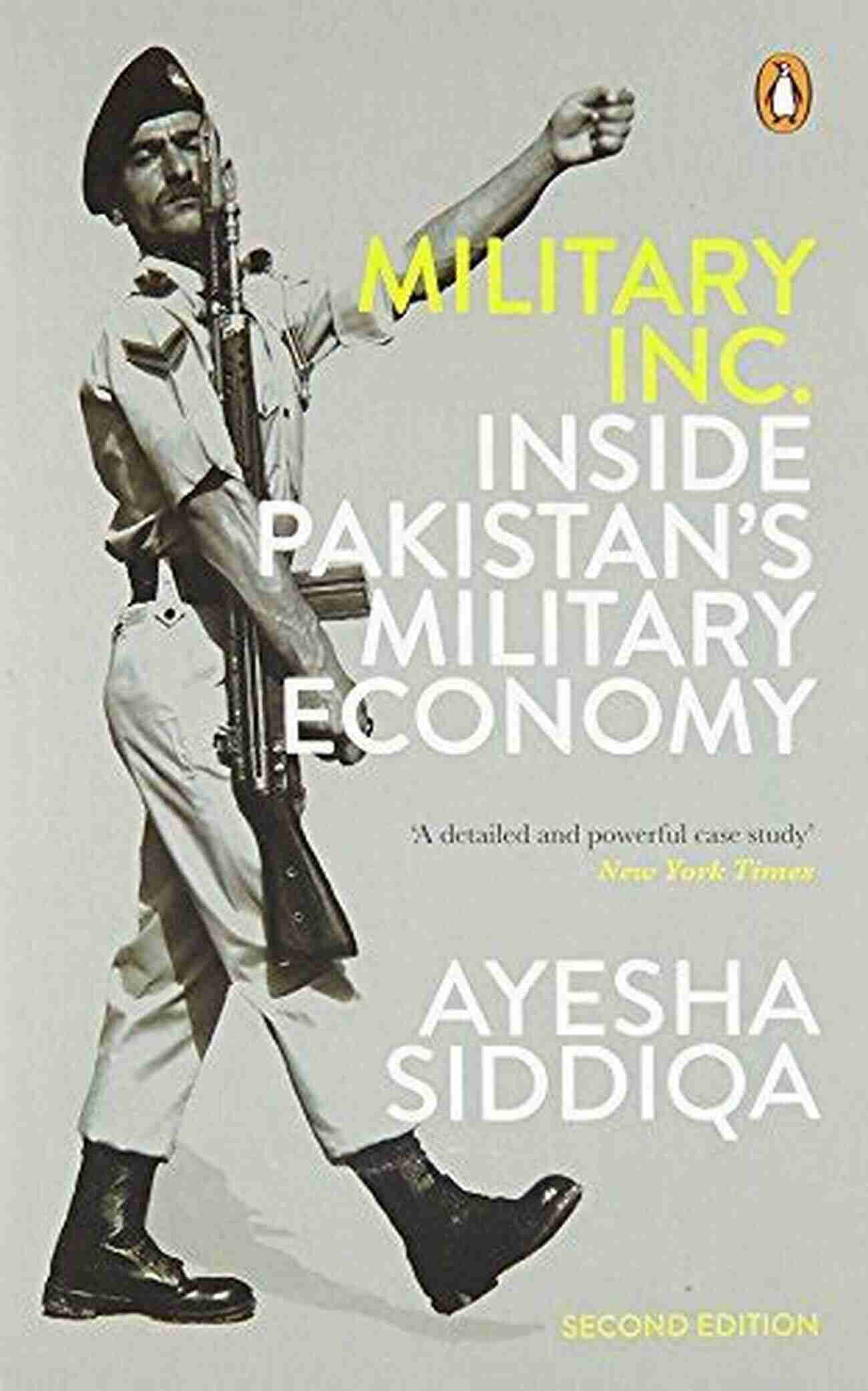
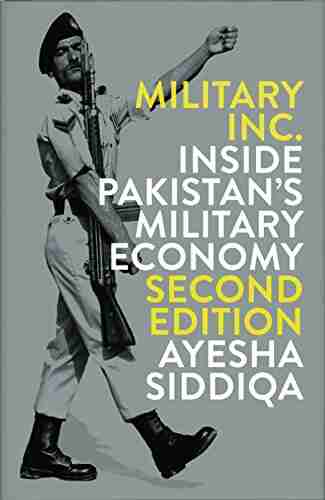
When it comes to Pakistan's military, one cannot overlook its extensive involvement in the country's economy. Known as "Military Inc," the Pakistan military has substantial economic interests that span across various sectors, making it a unique player in the country's financial landscape. In this article, we delve into the intricate workings of Pakistan's military economy, shedding light on its various dimensions and providing insights into this powerful entity's control over critical sectors.
The Evolution of Military Inc
The roots of Military Inc can be traced back to Pakistan's early years as an independent nation. The military, being a strong institution from the beginning, has always played a significant role in shaping Pakistan's political and economic landscape. However, it wasn't until the 1950s that the military's involvement in the economy started to take a formal shape. The establishment of military-run corporations and the acquisition of vast land holdings laid the foundation for what would become the military's economic empire.
Sector Dominance: Arms and Defense
Unsurprisingly, the military's primary domain of influence lies within the defense sector. With a large defense budget, the Pakistan military not only ensures the country's security but also has a significant say in arms procurement and defense-related industries. Military-owned entities, such as the Defense Housing Authorities (DHAs),are actively involved in real estate development and housing projects, generating substantial revenue streams. Additionally, the Pakistan military has also diversified into industries like manufacturing arms, ammunition, and military equipment, playing a crucial role in meeting the armed forces' requirements.
4.4 out of 5
| Language | : | English |
| File size | : | 3066 KB |
| Text-to-Speech | : | Enabled |
| Screen Reader | : | Supported |
| Enhanced typesetting | : | Enabled |
| Word Wise | : | Enabled |
| Print length | : | 320 pages |
Military and Media
Another sector where the military wields considerable influence is the media industry. Over the past few decades, the military has acquired media outlets, both directly and indirectly, enabling it to shape public opinion and control the narrative on various issues. The military's control over the media not only helps in maintaining its dominance but also serves as a tool for propaganda and information warfare.
Land Ownership and Commercial Ventures
Land holdings have long been an integral part of Military Inc's economic influence. The military owns vast stretches of valuable land across the country, often acquired through government allocations or confiscated through military legislation. This control over land has allowed the military to engage in commercial ventures, including agriculture, real estate, and even corporate acquisitions. These economic activities not only contribute to the military's financial power but also grant it significant leverage in policymaking and decision-making.
Accountability and Transparency Challenges
One of the significant concerns surrounding Military Inc is the lack of transparency and accountability. Due to its status as a powerful institution, the military enjoys certain privileges when it comes to financial operations. As a result, there is limited public oversight of its economic activities, which raises questions about fairness and potential conflicts of interest. Critics argue that the secretive nature of Military Inc undermines democratic principles and hampers the country's overall development.
Military Inc's existence and influence within Pakistan's economy are undeniable. From defense to media and land ownership, the military's presence permeates various sectors, shaping the country's economic landscape in substantial ways. While its economic prowess has undoubtedly yielded benefits in certain areas, the lack of transparency and accountability pose challenges to Pakistan's democratic processes. To ensure a sustainable and fair economic environment, it is essential for Pakistan to strike a balance between defense needs and transparent governance that encourages private enterprise and ensures equal opportunities for all.
4.4 out of 5
| Language | : | English |
| File size | : | 3066 KB |
| Text-to-Speech | : | Enabled |
| Screen Reader | : | Supported |
| Enhanced typesetting | : | Enabled |
| Word Wise | : | Enabled |
| Print length | : | 320 pages |
Pakistan is a strategic ally of the US in the ‘war on terror’. It is the third largest recipient of US aid in the world. Yet Pakistan is a state run by its army and intelligence service.
Operating in the shadows, Pakistan’s military industrial complex owns and controls swathes of the economic and political landscape of the country. Military Inc. dares to illuminate the military as an oppressive holding company possessing not just security-related businesses, but also hotels, shopping malls, insurance companies, banks, farms and even an airline. The result is a deeply undemocratic society, where money is funnelled towards the military's economic enterprises, leaving those in need of it impoverished and effectively disenfranchised.
With an empirical richness, and a view to Pakistan’s recent history, Ayesha Siddiqa offers a detailed and powerful case study of a global phenomenon: corruption, hollow economic growth and elitism.
This new edition includes a chapter on the recent developments of the military's foray into the media, and a new preface.

 Anthony Burgess
Everything You Need To Know About Building Referral...
Are you looking for ways to boost revenue...

 Glen Powell
 Aleksandr Pushkin
The Fascinating History of Afro Uruguay - Unveiling the...
Afro Uruguay refers to the rich and diverse...

 Anton Foster
Reflections From Stubborn Son: A Journey of...
Have you ever encountered a stubborn...
 Brennan Blair
Discover the Revolutionary World of Protein Modelling:...
Protein modelling is an essential...

 Ricky Bell
The Best Old Fashioned Advice: Timeless Wisdom Passed...
Have you ever turned to your grandparents,...
 Isaiah Price
Embark on an Unforgettable Journey: The Sword and Sorcery...
Are you ready to be...

 Hassan Cox
The Enchanting World of Wendy Darling Comes Alive in...
Step into the magical world of Neverland...

 Ivan Turner
Adsorption Calculations And Modelling Chi Tien: Unlocking...
In the field of chemistry, adsorption is a...

 Harvey Hughes
Unleashing the Full Potential of a Team: How To Organize...
"Genius is 1% inspiration and 99%...

 Desmond Foster
The Fascinating Journey of George Romanes: From...
George John Romanes, born on May 20, 1848,...

 Adrien Blair
The Untold Truth: The Bible In The Early Church - A...
Lorem ipsum dolor sit amet, consectetur...
Light bulbAdvertise smarter! Our strategic ad space ensures maximum exposure. Reserve your spot today!









 Devin RossUnveiling the Ultimate Weapon 45: Sniping and Anti-Materiel Rifles in the War...









 Daniel KnightFollow ·3k
 Braeden HayesFollow ·6.7k
 Quincy WardFollow ·5.4k
 Marcus BellFollow ·8.4k
 Jon ReedFollow ·17.9k
 Houston PowellFollow ·14.9k
 George MartinFollow ·11k
 Billy PetersonFollow ·11.9k
