


Do you want to contribute by writing guest posts on this blog?
Please contact us and send us a resume of previous articles that you have written.
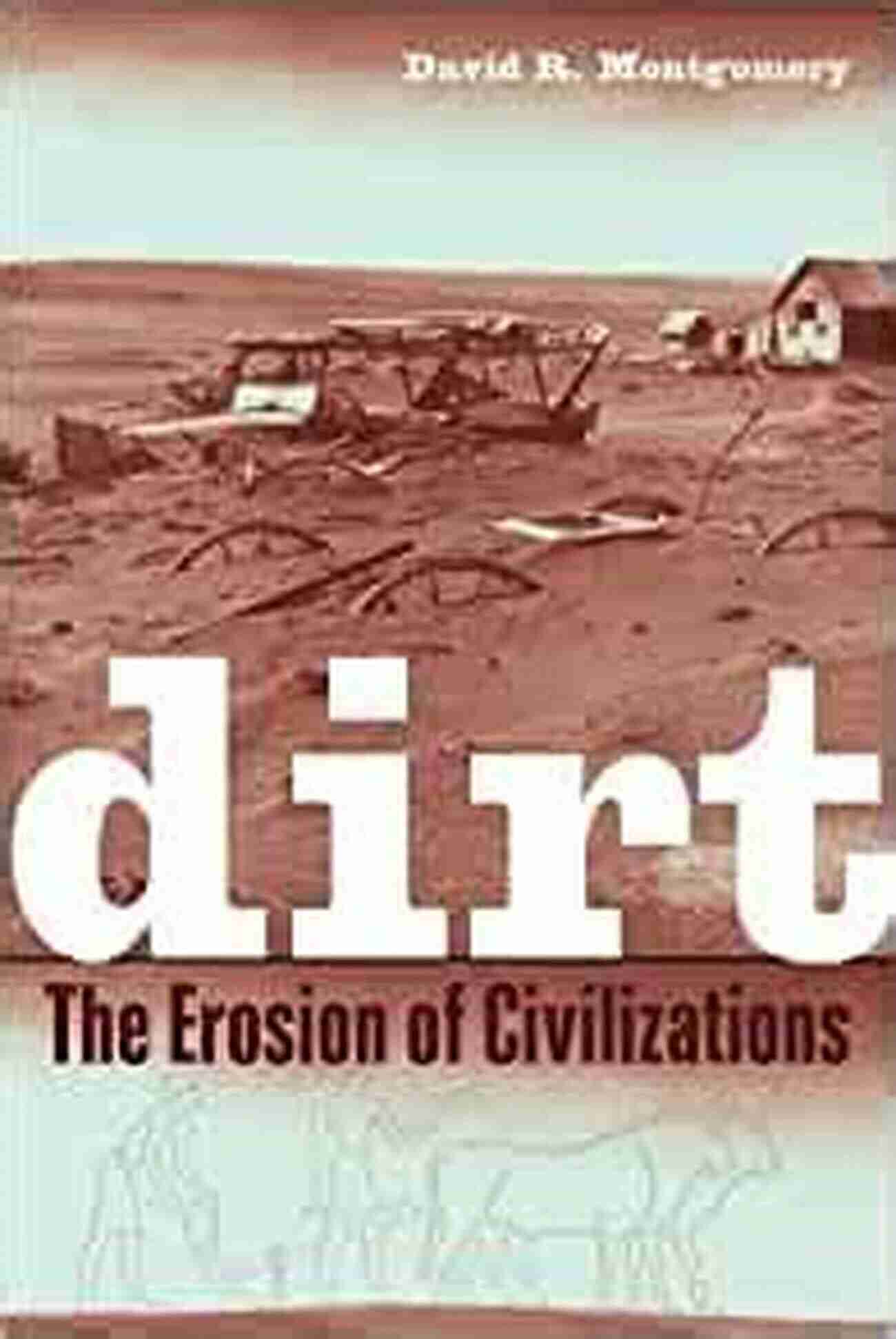
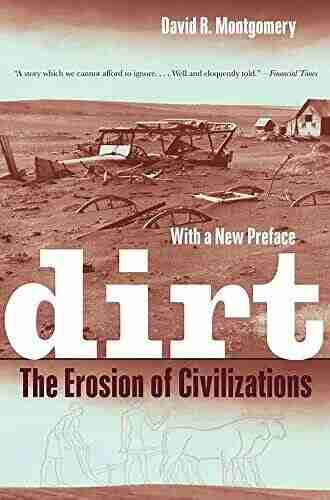
The Erosion of Civilizations With New Preface

The Rise and Fall of Civilizations
Throughout history, civilizations have risen and fallen, leaving behind remnants of their once-great achievements. From the ancient city-states of Mesopotamia and Egypt to the powerful empires of Rome and Byzantium, their stories have fascinated us as we examine the causes and consequences of their decline.
Unraveling the Mysteries Behind Erosion
However, what if the erosion of civilizations is not solely caused by external factors such as war, invasion, or natural disasters? This groundbreaking book, "The Erosion of Civilizations With New Preface," challenges traditional historical perspectives by delving into the internal forces that gradually weaken societies from within.
A New Preface: Unearthing Hidden Perspectives
The new preface to this insightful book provides a fresh perspective on the topic. Renowned historian Dr. Elizabeth Reynolds offers valuable insights into her research, introducing readers to an expanded understanding of the erosion of civilizations.
4.7 out of 5
| Language | : | English |
| File size | : | 3081 KB |
| Text-to-Speech | : | Enabled |
| Screen Reader | : | Supported |
| Enhanced typesetting | : | Enabled |
| Word Wise | : | Enabled |
| Print length | : | 299 pages |
| Lending | : | Enabled |
Dr. Reynolds explores how internal socio-political, economic, and cultural factors contribute to the erosion of civilizations. By examining power dynamics, societal inequality, corruption, and cultural changes, she uncovers the mechanisms that gradually weaken and eventually topple even the most prosperous nations.
Relevance to Modern Societies
While the book's main focus lies in historical contexts, its relevance to modern societies cannot be overlooked. Dr. Reynolds draws parallels between ancient civilizations and our contemporary world, urging readers to reflect on the potential threats our own societies face from within.
Examining current issues such as political polarization, income inequality, and the erosion of cultural values, the book serves as a wake-up call for individuals and societies alike. It highlights the importance of recognizing and addressing the gradual erosion of our institutions and values.
The Impact of Technology
One particular factor that has accelerated the erosion of civilizations in recent times is technology. While it has undeniably brought numerous benefits to humanity, it has also created new challenges that can lead to societal decay if left unaddressed.
The book explores topics such as the impact of social media on public discourse, the growing influence of artificial intelligence, and the potential consequences of unchecked technological advancements. By critically examining these issues, readers gain a deeper understanding of the delicate balance required to ensure long-term societal stability.
Reflecting on Our Future
As readers embark on this exploration of civilizations' erosion, they are prompted to critically assess the future trajectory of our own society. The book not only enhances historical knowledge but serves as a call to action, advocating for proactive measures to prevent the erosion of our civilization.
With its thought-provoking insights, "The Erosion of Civilizations With New Preface" challenges readers to question the status quo and actively contribute to the preservation and progression of our collective values and institutions.
Embrace the Past, Shape the Future
, the erosion of civilizations is a complex issue with far-reaching consequences. "The Erosion of Civilizations With New Preface" provides a comprehensive examination of the internal forces that contribute to the decline of societies.
By delving into historical contexts, drawing parallels to contemporary society, and addressing the impact of technology, the book offers valuable insights into the mechanisms that lead to societal decay. It ultimately encourages readers to reflect on their role in shaping the future of civilization.
Prepare to be captivated by this enlightening book and embark on a journey that transcends time and space, allowing you to understand the erosion of civilizations from a fresh and empowering perspective.
4.7 out of 5
| Language | : | English |
| File size | : | 3081 KB |
| Text-to-Speech | : | Enabled |
| Screen Reader | : | Supported |
| Enhanced typesetting | : | Enabled |
| Word Wise | : | Enabled |
| Print length | : | 299 pages |
| Lending | : | Enabled |
Dirt, soil, call it what you want—it's everywhere we go. It is the root of our existence, supporting our feet, our farms, our cities. This fascinating yet disquieting book finds, however, that we are running out of dirt, and it's no laughing matter. An engaging natural and cultural history of soil that sweeps from ancient civilizations to modern times, Dirt: The Erosion of Civilizations explores the compelling idea that we are—and have long been—using up Earth's soil. Once bare of protective vegetation and exposed to wind and rain, cultivated soils erode bit by bit, slowly enough to be ignored in a single lifetime but fast enough over centuries to limit the lifespan of civilizations. A rich mix of history, archaeology and geology, Dirt traces the role of soil use and abuse in the history of Mesopotamia, Ancient Greece, the Roman Empire, China, European colonialism, Central America, and the American push westward. We see how soil has shaped us and we have shaped soil—as society after society has risen, prospered, and plowed through a natural endowment of fertile dirt. David R. Montgomery sees in the recent rise of organic and no-till farming the hope for a new agricultural revolution that might help us avoid the fate of previous civilizations.

 Anthony Burgess
Everything You Need To Know About Building Referral...
Are you looking for ways to boost revenue...

 Glen Powell
 Aleksandr Pushkin
The Fascinating History of Afro Uruguay - Unveiling the...
Afro Uruguay refers to the rich and diverse...

 Anton Foster
Reflections From Stubborn Son: A Journey of...
Have you ever encountered a stubborn...

 Brennan Blair
Discover the Revolutionary World of Protein Modelling:...
Protein modelling is an essential...

 Ricky Bell
The Best Old Fashioned Advice: Timeless Wisdom Passed...
Have you ever turned to your grandparents,...
 Isaiah Price
Embark on an Unforgettable Journey: The Sword and Sorcery...
Are you ready to be...

 Hassan Cox
The Enchanting World of Wendy Darling Comes Alive in...
Step into the magical world of Neverland...

 Ivan Turner
Adsorption Calculations And Modelling Chi Tien: Unlocking...
In the field of chemistry, adsorption is a...

 Harvey Hughes
Unleashing the Full Potential of a Team: How To Organize...
"Genius is 1% inspiration and 99%...
 Desmond Foster
The Fascinating Journey of George Romanes: From...
George John Romanes, born on May 20, 1848,...

 Adrien Blair
The Untold Truth: The Bible In The Early Church - A...
Lorem ipsum dolor sit amet, consectetur...
Light bulbAdvertise smarter! Our strategic ad space ensures maximum exposure. Reserve your spot today!



 Curtis StewartDemystifying the Tetrad Formalism: Unraveling Exact Cosmological Observables




 Kevin TurnerThe Complete WWE Guide Volume Six: Unveiling the Ultimate Wrestling Spectacle



 Gabriel MistralThe Complete Army Survival Guide To Shelter Skills Tactics And Techniques US



 Jonathan HayesFollow ·13.8k
 Hunter MitchellFollow ·13.3k
 Nathaniel HawthorneFollow ·15.2k
 Frank ButlerFollow ·17.7k
 Leslie CarterFollow ·8.1k
 Philip BellFollow ·15.1k
 Evan HayesFollow ·10.2k
 Jack LondonFollow ·6k
